
November is National Diabetes Awareness Month 2026
This National Diabetes Awareness Month, discover simple ways to raise awareness, reduce barriers to care, and empower people with or at risk for diabetes.

Fragile X syndrome is considered rare, affecting about 100,000 Americans. At the same time, though, it is estimated that around 1.5 million people are carriers of a Fragile X mutation.
Fragile X is the most common inherited cause of intellectual disability and the most common single-gene cause of autism. Because of its overlap with autism and other conditions, Fragile X research helps scientists better understand how the brain develops and functions, leading to discoveries that benefit people within and beyond the Fragile X community.
Fragile X Awareness Month is all about raising awareness of this condition and advocating for ongoing research and support. Below, we’ll explore five ways to get involved. But first, let’s take a look at what Fragile X is and how this event got started.
Fragile X syndrome (FXS) is a genetic condition caused by a mutation in the FMR1 gene. This gene provides instructions for making a protein that plays an important role in brain development and nervous system function.
When the FMR1 gene doesn’t work as expected, it can affect learning, development, behavior, and communication. Nearly all boys and about 50% of girls with Fragile X syndrome have some degree of intellectual or developmental disability (IDD). In addition, 50%-70% of individuals with Fragile X are autistic.
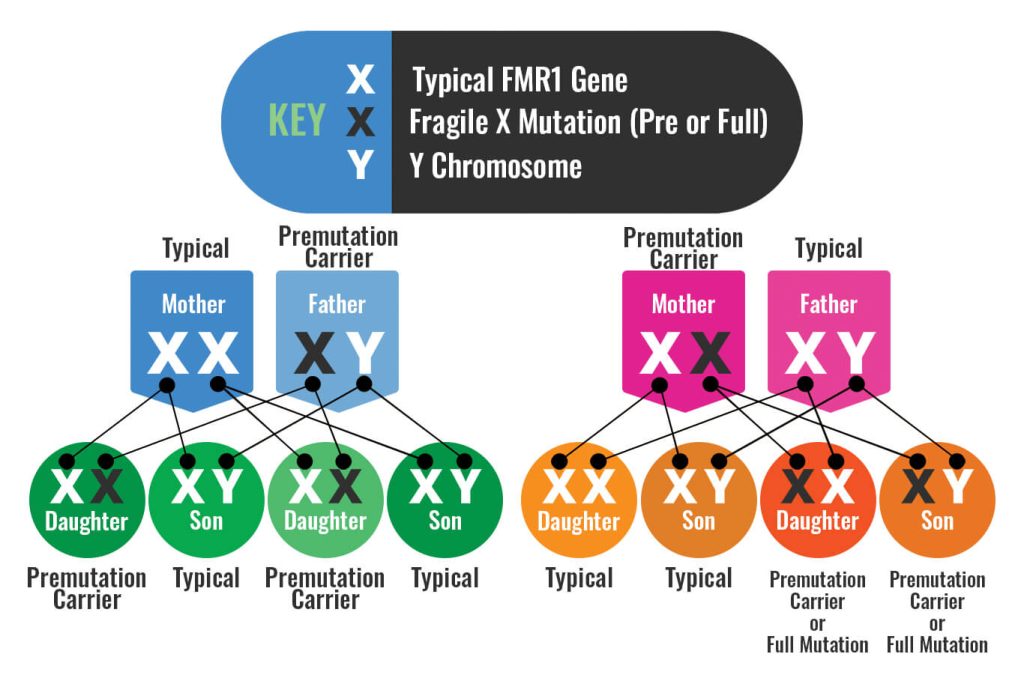
Fragile X is unique among rare diseases because it is both genetic and hereditary. Around 1.5 million people in the U.S. carry a premutation in the FMR1 gene. While premutation carriers may not have Fragile X syndrome themselves, they often experience Fragile X related health conditions and pass the gene on to their children. Females with the Fragile X premutation have a 50/50 chance of passing it to their children, while males will pass it to their daughters.
Researchers first identified the genetic mutation responsible for Fragile X in 1991.
Before that, scientists had observed patterns of inherited intellectual disability that appeared to be linked to the X chromosome. In 1943, it was termed Martin-Bell syndrome, but scientist didn’t yet know the underlying cause.
The discovery of the FRM1 gene was a major milestone in helping families find answers, connect to support, and advance research into this condition.
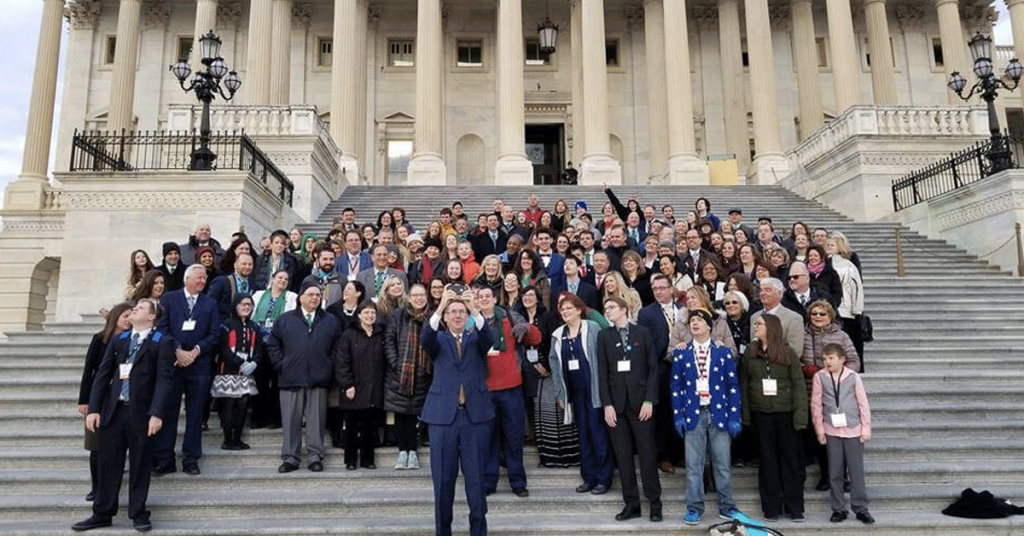
Nine years later, in 2000, Congress designated July 22 as National Fragile X Awareness Day in response to advocacy efforts from individuals with FXS and their allies.
Over time, the National Fragile X Foundation expanded the observance to a full month. Today, National Fragile X Awareness Month is dedicated to raising awareness among families, healthcare professionals, educators, policymakers, and the general public while promoting the rights and inclusion of people with Fragile X.
Whether you have Fragile X, support someone who does, or simply want to learn more, there are lots of ways to get involved in Fragile X Awareness Month this July.
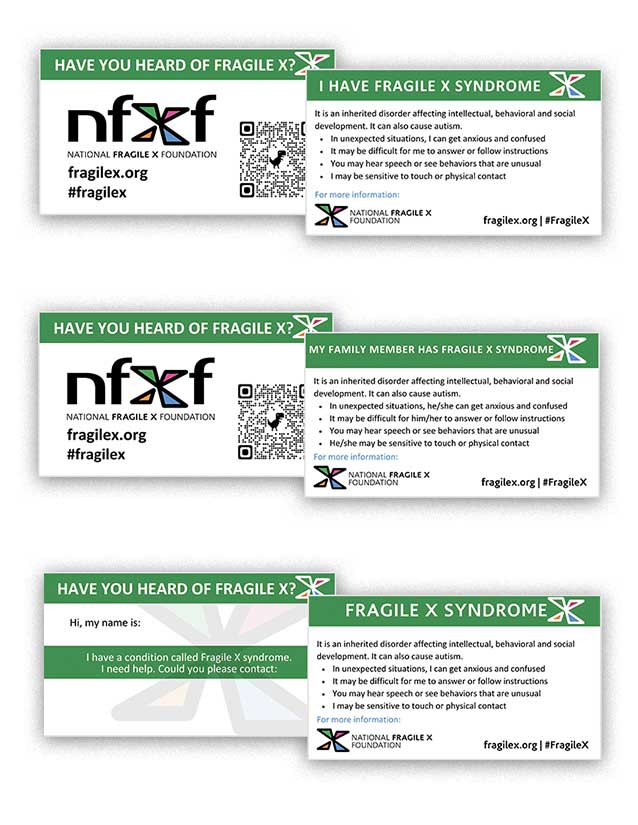
Awareness has come a long way over the last few decades, but many people are still unfamiliar with FXS. The National Fragile X Foundation offers free printable awareness cards that explain what Fragile X is and how it may affect communication and behavior. Individuals and families can use these cards when interacting with first responders, healthcare providers, and the broader community.
If you spend time in virtual meetings, a Fragile X Awareness Zoom background is a simple way to start a conversation about FXS. The National Fragile X Foundation has created several free downloadable backgrounds that you can use this July as part of the annual awareness campaign.
X Strides is the National Fragile X Foundation’s signature fundraising event. Participants walk, roll, bike, and even rollerblade to raise funds for research and advocacy. Whether you join an existing event or sponsor a team, X Strides is a great opportunity to connect with others while helping raise awareness about FXS.

Research studies and clinical trials help scientists better understand Fragile X and develop new supports and treatments. Researchers need participants with Fragile X, as well as premutation carriers (people who don’t have Fragile X but are carriers of a FMR1 gene premutation), and non-carriers to serve as a comparison or control group. Explore the National Fragile X Foundation’s list of research opportunities for ways to get involved.
Advocacy plays an important role in advancing legislation related to Fragile X specifically, as well as broader disability issues like Supplemental Security Income (SSI), competitive integrated employment, and healthcare access. Even a simple email or phone call to your congressperson using this script can help move these priorities forward.
Ongoing advocacy, research, and support can create opportunities for people with Fragile X today while paving the way for future discoveries that benefit many others. And since July is also Disability Pride Month, it’s the perfect time to celebrate the disability community and explore more ways to get involved. For more ideas, download the free Disability-Related Events Calendar.
This National Diabetes Awareness Month, discover simple ways to raise awareness, reduce barriers to care, and empower people with or at risk for diabetes.

This year’s World Usability Day theme is “Emerging Technologies and Human Experience.”

National Epilepsy Awareness Month aims to raise public awareness about epilepsy, a neurological disorder characterized by recurrent seizures.


