
October is National Disability Employment Awareness Month
The theme for 2026 is “Celebrating Value and Talent.” Here’s how to get involved.


Women have been at the forefront of the fight for disability inclusion, access, and equity for decades. From participating in sit-ins to pushing boundaries and challenging stereotypes, their contributions have played an instrumental role in carving out the rights of Americans with disabilities.
In this article, we’re highlighting seven women who helped shape the disability rights movement. While some of these names may be familiar to you, others are less well-known — but their accomplishments are just as important.
Alice Wong is a Chinese American disability activist, writer, and consultant who has spinal muscular atrophy. Growing up, Wong — who uses a power wheelchair and BiPap machine — felt like she stuck out among her classmates and wrestled with the desire to blend in.
That all changed when Wong began studying disability history in college and decided to pursue a career in disability advocacy. In 2013, Wong was appointed to the National Council on Disability by Barack Obama, where she advised the President and Congress on policies, programs, and practices that impact people with disabilities.
However, Wong is best known for founding the Disability Visibility Project, an online community dedicated to amplifying disability media and culture. She is also an independent research consultant for Netflix, Twitter, and other disability rights organizations.
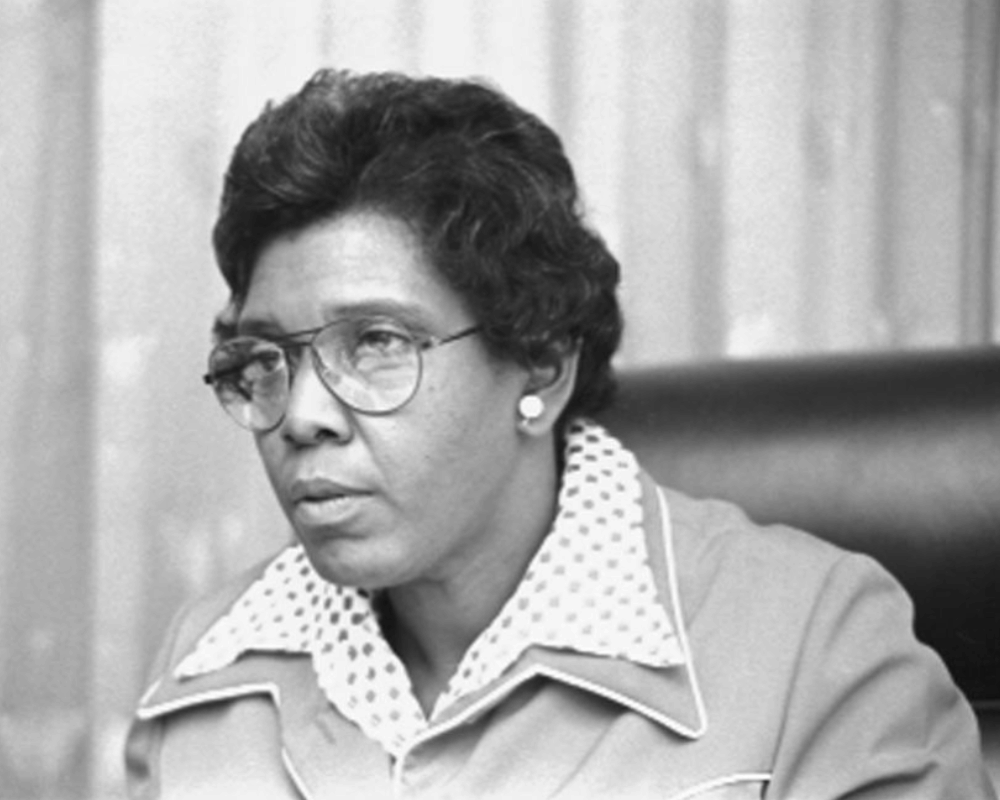
Barbara Jordan was a Black lawyer, politician and civil rights leader who had multiple sclerosis. Jordan was a “first” in many things, including the first Black member of the Texas Senate since 1883 and the first woman ever elected to that legislative body. When she was elected to the U.S. House of Representatives in 1972, she became the first LGBTQ+ woman in Congress as well as the first Black woman to represent the south.
Jordan first came to national attention for her eloquent opening statement at the House Judiciary Committee’s Watergate hearings, which is credited with helping lead to President Richard Nixon’s resignation. In 1992, she gave the keynote speech at the Democratic National Convention from her wheelchair.
Although Jordan never spoke publicly about her disability, she played a crucial role in breaking down societal barriers and promoting inclusion through her visibility on the national stage.

Jazzie Collins was a Black trans woman activist and community organizer for transgender rights, disability rights and economic equality in San Francisco. After transitioning in her late 40s, Collins became a vocal advocate for minorities including seniors, people with disabilities, and members of the LGBTQ+ community. She was also open about being HIV-positive.
Collins served on the Lesbian Gay Transgender Senior Disabled Housing Task Force. She was also a community organizer for Senior and Disability Action, an organization that mobilizes seniors and people with disabilities to fight for affordable housing, health care, and transit. Among her many contributions, Collins worked to help raise the minimum wage in San Francisco to $8.50 in 2003 — the highest minimum wage in the country at the time.
Collins’ legacy lives on through Jazzie’s Place, the first homeless shelter in the United States for the adult LGBTQ+ community, which opened in 2015 and serves as a safe haven from the violence and abuse that the homeless LGBTQ+ population often experiences.

Johnnie Lacy was a Black activist whose work was critical to the independent living movement. While attending nursing school at age 19, Lacy contracted polio and became paralyzed. She later applied to San Francisco State University to study speech-language pathology, but was blocked from the program because of her disability.
Lacy advocated for her rights and was eventually admitted, but was not allowed to participate in the graduation ceremony or officially be part of the school because of her disability — which only fueled her determination to become active in the disability rights movement.
In 1981, Lacy helped found the Center for Independent Living in Berkeley, California — one of the first organizations in the country to empower people with disabilities to lead independent lives. She later served as director of the Community Resources for Independent Living (CRIL), which connects individuals with disabilities to community resources like transportation, housing assistance, and advocacy services. Lacy’s outspoken advocacy efforts helped pave the way for the Americans with Disabilities Act, a landmark law that affirms and protects the rights of individuals with disabilities in public life.

Judy Heumann was a civil rights activist for people with disabilities, and is remembered as the “Mother of the Disability Rights Movement”. Although Heumann, who had polio as a child, was told she could not attend school at age five because her wheelchair was deemed a “fire hazard”, she later earned her degree in education and became the first wheelchair user to teach in a New York public school.
As she put it, “Disability only becomes a tragedy for me when society fails to provide the things we need to lead our lives––job opportunities or barrier-free buildings, for example. It is not a tragedy to me that I’m living in a wheelchair.”
Heumann’s experience with discrimination fueled her passion for ensuring civil rights protections for people with disabilities. In 1977, she organized the successful Section 504 sit-ins in San Francisco. She also co-founded the World Institute on Disability and served as the first Special Advisor for International Disability Rights at the U.S. Department of State, where she helped promote the rights of people with disabilities around the world.

Joyce Ardell Jackson was a Black disability advocate. She suffered from arthritis from the age of 12, and underwent more than 50 operations. However, this didn’t stop her from graduating from college and working for prestigious companies like McDonnell Douglas and British Telecommunications. Jackson’s most notable accomplishment, though, was convincing federal officials to enforce Section 504 of the Rehabilitation Act — a landmark law banning discrimination against people with disabilities.
In 1977, Jackson and 150 disabled activists and allies (including Judy Heumann) occupied the San Francisco office of the Department of Health, Education, and Welfare (HEW) for over a month, refusing to leave until HEW agreed to implement the protections promised under Section 504. As national protests continued, Jackson even traveled to Washington D.C. to meet with representatives from the Carter administration.
These efforts were ultimately successful, and regulations were enacted to implement Section 504, the landmark civil rights legislation prohibiting federally funded agencies, programs, and activities from discriminating against individuals with disabilities. Moving forward, all agencies and programs receiving federal funds were required to accommodate individuals with disabilities, ensuring access to opportunities in education, employment, housing, and other areas.

Mary Lou Breslin is a disability rights law and policy advocate and analyst. Breslin, who grew up with a polio-related disability, found that her options for college were limited due to her use of a wheelchair. In spite of this, she earned a degree in sociology from the University of Illinois Urbana-Champaign, which she selected because it was more accessible than other colleges.
In 1979, Breslin co-founded the Disability Rights Education and Defense Fund (DREDF), a leading national civil rights law and policy center. Her work played a pivotal role in enactment of the Americans with Disabilities Act of 1990 (ADA).
Breslin has also achieved numerous victories in healthcare reform for people with disabilities, such as ensuring the 2010 Affordable Care Act (ACA) included accessibility requirements. Today, Breslin serves as senior policy advisor with DREDF leading the charge on the organization’s healthcare research initiatives.
Without the contributions of these seven women, many of the rights and protections for people with disabilities would not exist today. As the fight for equity, access, and inclusion continues, we will need even more trailblazing women to rise up and make these rights a reality for everyone.
The theme for 2026 is “Celebrating Value and Talent.” Here’s how to get involved.

This October, embrace Health Literacy Month by making health information more accessible for individuals with disabilities.

Practical ways IDD providers can attract billing specialists and keep their most experienced billing staff.


